


Glass Containers with Wood Lids
Why Choose Us
Rich experience
The factory has 16 years of OEM/ODM expertise.
Company strength
10 large-capacity production lines. Offers a wide range of customization options. Efficient supply chain and 15,000 square meters of warehouse.
One stop solution
Extensive OEM/ODM services as well as custom mold creation, dedicated design, production and sales teams ensure 24-hour response and on-time delivery.
QC
Strict quality control in line with international standards of inspection and testing. FDA, SGS, CE and other certifications ensure product safety and quality. A skilled production team and ISO9001 certification ensure consistent quality.
What is Glass Containers with Wood Lids
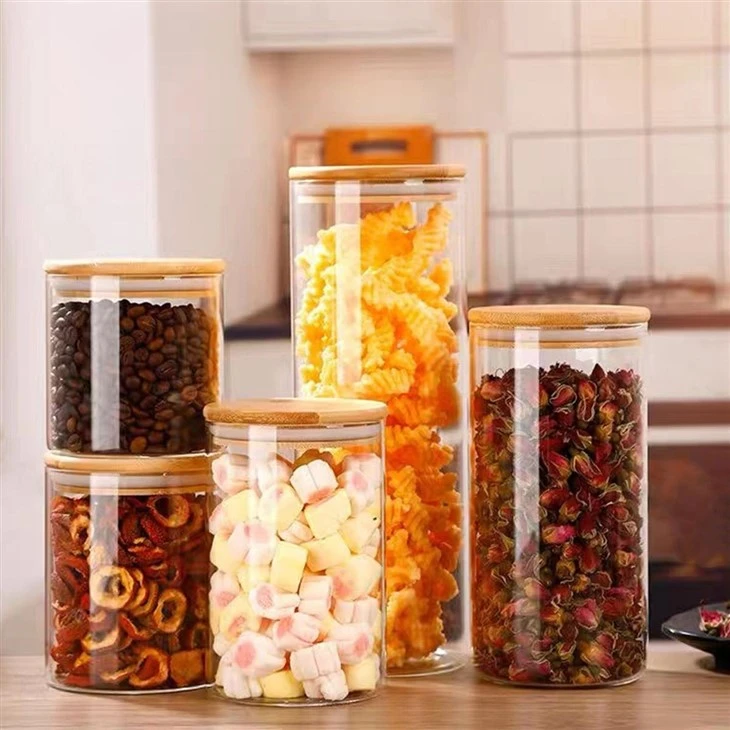
Glass container with wooden lid, versatile. They can be used to store a variety of food items, including dry goods, spices, crackers and snacks. You can also use them to store non-food items such as craft supplies, bathroom accessories, and office supplies. The possibilities are endless!


Benefits of Glass Containers with Wood Lids
Cheap to purchase
As good as they are, glass containers with wood lids aren't an extremely expensive item to get your hands on. Glass is a relatively cheap material and glass containers with wood lids follow suit. While items like disposable cans or plastic containers can sometimes prove cheaper, glass containers with wood lids won't set you back much.given how reusable they are, glass containers with wood lids pay for themselves quickly as well. You won't need to worry about rebuying storage materials as you will with other materials. Being able to skip this cost by reusing your glass containers with wood lids over and over will quickly cover the cost of the jars themselves.
Sustainable and eco-friendly
One of the greatest benefits of glass containers with wood lids is their reusable packaging. While cans are discarded after use, glass containers with wood lids are instead cleaned and reused. Whether you intend to store goods in them again, customize them, or send them to someone else, they're infinitely reusable.they also have a much higher recycling rate and efficiency. Glass recycling produces no extra materials that need discarding. Instead, you only have the glass itself to worry about, making it highly environmentally friendly packaging.
Sterile and clean
Sometimes, cleaning out containers is an absolute chore. We've all had the situation where we used plastic to store something and had the container stain irreversibly. It also can sometimes prove difficult to properly sterilize containers before storing goods.glass jar packages are much easier to clean and sterilize. Glass naturally doesn't let things stick to it as much as other materials like metal will. They are easily submerged in soapy water to soak and clean.additionally, you can sterilize glass containers with wood lids easier than others. A pot of boiling water can hold your glass containers with wood lids and sterilize them completely by boiling. This makes it much easier to ensure that you're storing or shipping your goods in a fully sterilized environment.
Flavor doesn't leech
Another problem that you'll have with some materials is the flavor leeching into your goods. This is especially the issue with storing food goods - you likely don't care much about the flavor of a candle, after all. But when storing or shipping food goods, you want the flavor intact as much as possible.using materials like metal to store your container can cause flavors to leech into your product. Long-term storage can especially cause a metallic flavor to seep into food. Some types of cans and packaging do this more severely than others.glass doesn't have this issue and can store items indefinitely without letting the flavor leech. So long as the product inside of the glass jar lasts, the glass won't alter the flavor at all. The only thing you need to worry about is storing the Glass Containers with Wood Lids in a proper location.
Application of Glass Containers with Wood Lids
Lid material
When choosing the right glass containers with wood lids, you'll want to make sure you pay attention to the lid. You'll come across plastic, metal, wood, and glass lids and each has its pros and cons. If you want to be able to heat up a container in a microwave, make sure the lids are compatible. As spicer noted, glass containers keep out unwanted pests, this is also the case for the lid material. While the lid may add to a container's aesthetic, if there's even a possibility for pests, you'll want to go with an airtight option.
Set variety
Having a variety of glass containers with wood lids can make all the difference for space and organization. So you'll want to choose sets with different sizes for easier maintenance and different needs. "Decanting dry goods to airtight glass containers [can] help us easily see when supplies are running low, use the space more efficiently, and it motivates us to stay organized," Says ter avest. So incorporating set variety in your home helps keep your life on track.
Features
When you're narrowing down choices, think about some of its features. Do you need tempered or borosilicate glass? Is leakproof necessary? What about an oven-safe, microwave-safe, and freezer-safe container? Depending on your needs you'll find that one that works better than the others. Just remember that if the goal is to store your food safely in the freezer, then tempered or borosilicate glass is the answer.
Maintenance
All glass containers with wood lids should have some ease when you're cleaning them and using them for your food. When debating whether glass food containers are great for storage and reheating, "Storage glass casseroles or glass bowls are great for storing leftovers in the fridge as they can just easily be transferred into the microwave to heat up," Says charif. "Glass also manages to deal with heat much better than plastic, making it perfect to heat up and eat out of." The nonporous nature of glass just makes your life easier for cooking and longevity.
Types of Glass Containers with Wood Lids
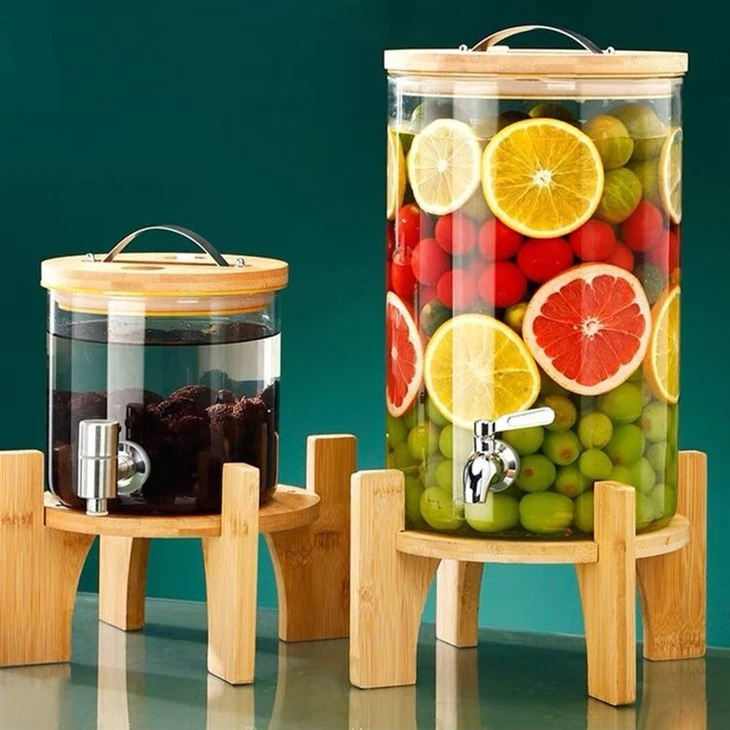
Kitchen Storage Jars
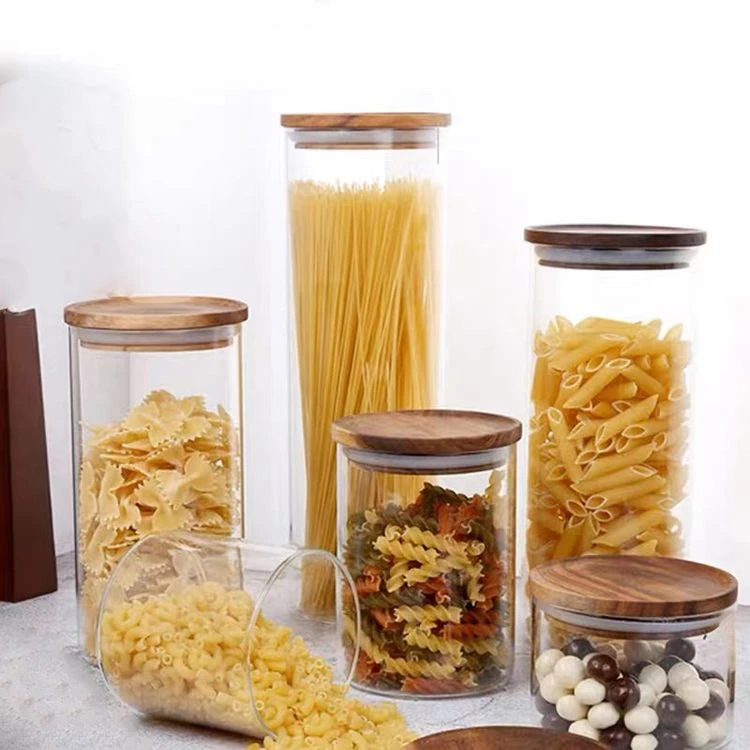
In the kitchen, glass storage jars are like unsung heroes. They're not just pretty — they're super useful too, especially for keeping dried ingredients like flour, sugar, pasta, and spices in check.Mason and weck jars are perfect for jams, jellies, and even colorful cordials and fruit gins when it comes to preserving your homemade goodies.Tall versions of these jars are awesome for storing all those creative concoctions you come up with.
Glass Bathroom Jars
Transform your bathroom into a haven of elegance and organization with the magic of glass storage jars.Imagine neatly arranged q-tips, bath salts, and your favorite skincare products resting gracefully in these jars. Even those cotton wool buds take on a new level of loveliness when showcased in these glass wonders, especially if you snag some charming pastel shades.With their clear design, you'll never be caught off guard by empty supplies. Spotting the dwindling stash becomes a breeze, ensuring you're always prepared.
Glass Jars in Playroom
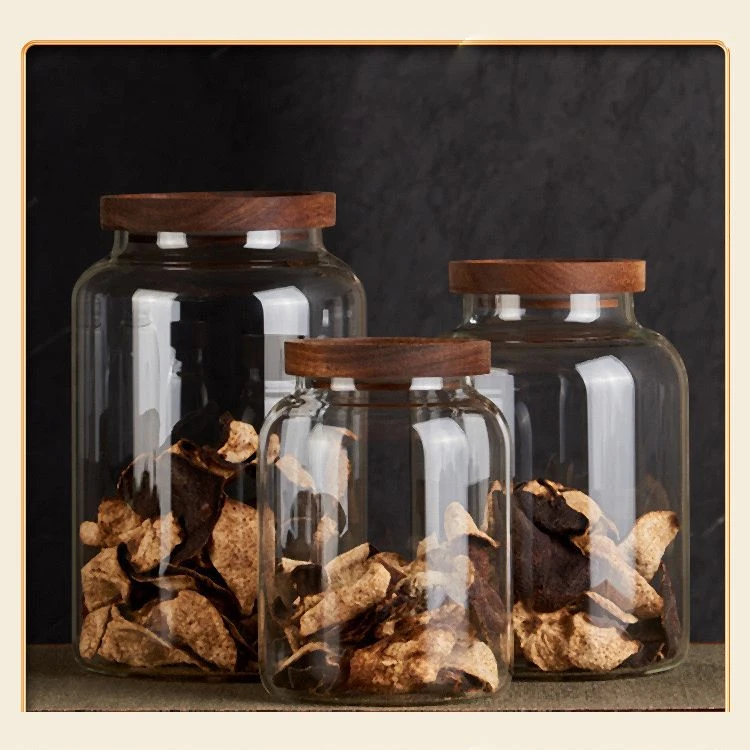
Extend the magic of glass storage jars to your playroom and discover a world of tidy delight for your child's toys and treasures.Picture this: building blocks, crayons, and art supplies all cozied up in these jars, creating a tidy and accessible display.Your child can easily spot and grab their playthings so that they can sparke creativity and fun in an instant.
Glass Container in Craftroom
For those who are blessed with a craft haven, glass jars become your artistic accomplice.Whether you're into painting or knitting, glass storage jars can hold your art supplies with style.Use them to store embroidery threads, pens, ribbons, fabrics, stamps, buttons, beads and other essentials. Line them up on your shelves, each jar becomes a mini showcase, making your crafting space a gallery of inspiration.

Size Matters
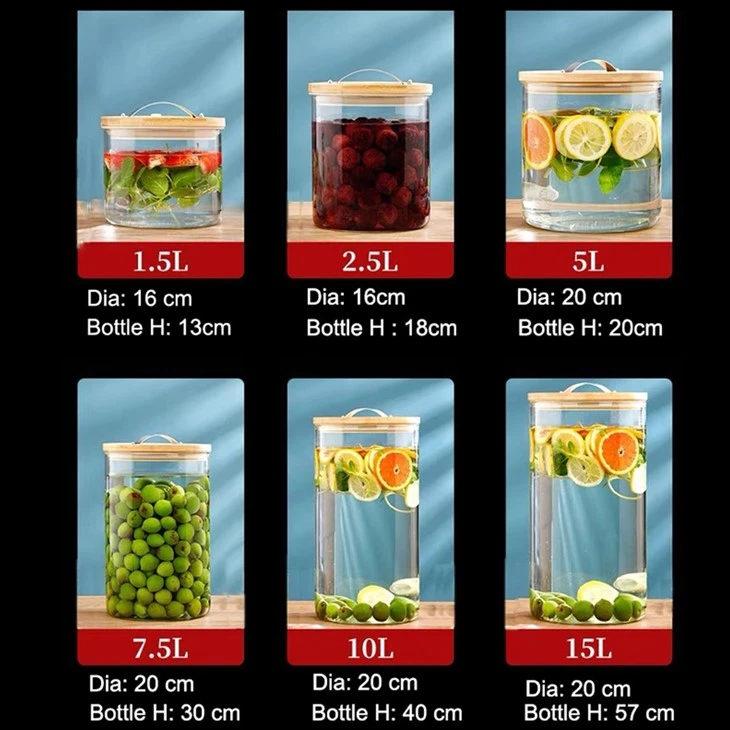
One of the first considerations when selecting Glass Containers with Wood Lids for your products is the size. Think about the volume of your products and how much space they require. Are you packaging spices, jams, or beauty products? We offer a wide range of Glass Containers with Wood Lids in various sizes to suit your specific needs. For smaller items, our mini Glass Containers with Wood Lids are perfect for a touch of elegance, while our larger jars can accommodate bulk items.
Shape and Style
The shape and style of your glass containers with wood lids can set the tone for your product's presentation. Our collection includes a variety of shapes, from classic round jars to unique square and hexagonal options. Whether you want a vintage look or a modern, sleek design, we have glass containers with wood lids to match your brand aesthetic.
Closure types
Consider the type of closure you need for your glass containers with wood lids. Our product line includes jars with various closure options, such as screw-on lids, cork tops, and pop-up button lids. The choice of closure can impact the product's freshness and ease of use.
Glass type
The type of glass used can influence the durability and appearance of your glass containers with wood lids. Our glass containers with wood lids are made from high-quality materials to ensure they are not only aesthetically pleasing but also sturdy. We offer clear and amber coloured glass options to suit your product's specific requirements.
Brand customisation
To make your glass containers with wood lids stand out, consider customisation options. Considering labelling and branding your jars that can include your logo, product information, and labels that complement your branding.
Application-specific jars
Certain products require specialised glass containers with wood lids. For example, if you are in the food industry, our airtight glass containers with wood lids are perfect for preserving the freshness of your products. If you're in the cosmetics business, our uv-protected glass containers with wood lids can help extend the shelf life of your products.
Main Components In The Glass Containers with Wood Lids Manufacturing Process
The composition of raw elements, when combined and heated, makes glass containers. Each material has its purpose in glass bottle manufacturing and contributes to the glass forming process. These main components and their purpose in the mix, according to the Glass Packaging Institute (GPI), are:
Silica sand
Silica sand is a network former present in glass production. This component is considered a backbone in glass making.
Soda ash (sodium carbonate)
Soda ash is seen as a fluxing agent, guaranteeing the melting of the glass and its flowability.
Limestone
Ensure durability in the glassy phase.
Cullet
Cullet is recycled glass used in the mixture to potentiate the melting process, enhancing furnace efficiencies.
Test for Glass Containers with Wood Lids: The Quality Control of the Packaging Material
Solubility Test
The solubility test is an important analytical procedure performed on the glass to determine its chemical durability and resistance to alkali leaching when in contact with water or aqueous solutions.In this test, a piece of glass is immersed in distilled water or dilute acid, and the solution is then evaluated to determine the amount of glass that has dissolved into the liquid.The test aims to provide an indication of the hydrolytic resistance and chemical stability of a glass material under extreme conditions. The results serve as a quality control check to ensure compliance with specifications and suitability for the intended pharmaceutical or other application.
Thermal Shock Resistance Testing
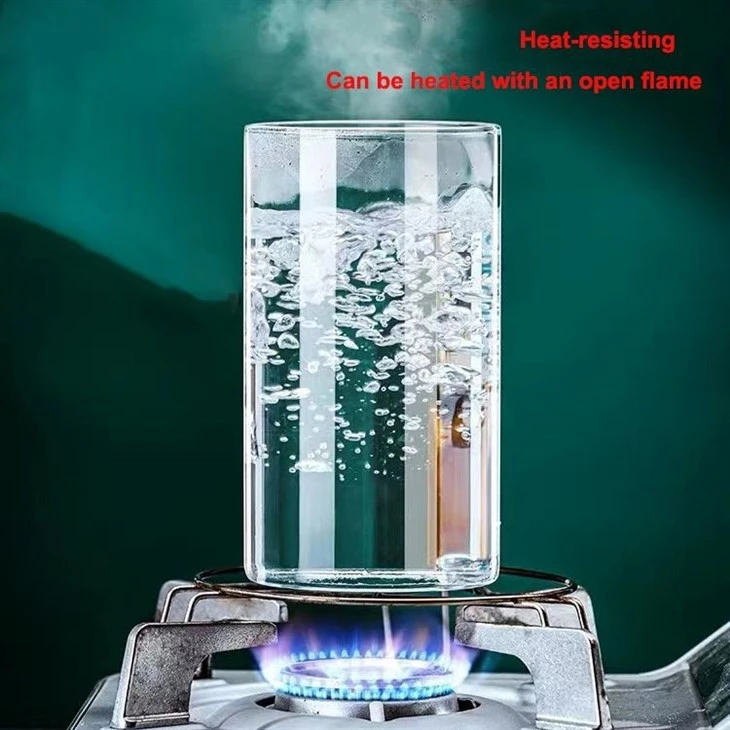
Thermal shock resistance testing determines the ability of materials and components to withstand sudden extreme temperature changes without cracking, fracturing or undergoing physical damage.In this test method, test specimens are subjected to rapid thermal transitions like immediate transfers between hot and cold environments or abrupt temperature changes in the surrounding medium.Typical temperature extremes range from -70°C to +150°C.
Vertical Load Test
The vertical load test, also known as the axial load test, is a key quality control test performed to determine the mechanical strength and ability of glass containers to resist vertical forces during handling and storage.In this test, containers are subjected to gradually increasing compressive load applied vertically through flat plates until failure occurs. The load level causing failure is noted to compare against specified limits. The test can also be carried out to a pre-set load level for pass/fail evaluation.
Internal Pressure Strength Test
Internal pressure strength testing determines the ability of glass bottles and jars to resist fracture when subjected to expected internal pressures during processing and shelf life.In this test method as per ASTM C147, glass containers are securely sealed and gradually pressurized internally either at a steady rate (Method B) or held at a pre-set pressure level (Method A) until bursting occurs. The pressure level causing failure is recorded.Key aspects evaluated are the maximum inner surface pressure withstood and the mode of fracture. The measured burst pressure is compared with specified limits based on container dimensions, capacity, and expected product pressures.
How to Clean Glass Containers with Wood Lids for Reuse
Step 1 - Soaking
You'll want to soak the jars for a few hours or leave overnight hot water. This step is to get the attached labels saturated and easier for you to remove.Why remove the labels, you might ask? Well, the labels are much of a muchness. I personally prefer to remove them as, more often than not, they're added to the glass with toxic, super sticky adhesives that fade over time and can be quite the eyesore when it comes to pantry organization.
Step 2 - Label Removal
Now, here's where things can go one of two ways: pure luck might see you scrape the presoaked label (with your nails or steel wool) off the glass OR you could get the dreaded clingers, as I like to call them. For stubborn labels that leave a sticky residue, apply vegetable oil, peanut butter, or lemon essential oil and leave for 30 minutes.
Step 3 - Stubborn Labels
After 30 minutes revisit the label with your nails or steel wool and scrub/scrape until all glue has been removed. You'll need a little patience and elbow grease in some cases so, if the sticky substance is putting up a fight, repeat stages 1-3 including the hot water soak.
Step 4 - Scrub and Soak
Now that we're like a millennial couple afraid of commitment and have removed the label, you'll want to give the jar a good ol' scrub with more focus on the inside of the jar this time. Prepare warm water and your cleaning liquid of choice. Separate the jar from its lid and place each piece into your soapy water and soak for 5-10 minutes.
Step 5 - Final Scrub
Once you've soaked your jar and lid, scrub the entire inside of the jar with your cleaning tool of choice (while a regular cleaning sponge will do, a bottle brush or steel wool will work perfectly too, if not better. Once you've thoroughly cleaned the inside of the jar, scrub the exterior, and don't forget the bottom! Your final wash will be the lids - food residue and odors can cling to the lid's lip so be sure to give the circumference fold extra attention.
Step 6 - Rinse
Rinse with warm water and reuse however you choose fit.
Our Factory
Our company was founded by a skilled worker who had a deep love for his family and a passion for creating beautiful kitchen glass products. As he worked tirelessly to perfect his craft, he found that the products on the market didn't meet his exacting standards. He decided to create his own product that would be perfect for his family's needs, and that was the beginning of our journey.As his daughter grew up, she saw how much her father loved his work and how much he cared for their family. She was inspired by his passion and determination to create something that was not only beautiful, but also practical and useful. She suggested that they start a company to share their products with the world, and so they did.


Our certificate

FAQ
As one of the leading glass containers with wood lids manufacturers and suppliers in China, we warmly welcome you to buy bulk discount glass containers with wood lids made in China here from our factory. All customized products are with high quality and competitive price. Contact us for quotation.
Glass Jars with Stainless Steel Lids, Glass Canister with Stainless Steel Lid, Spice Jars with Rack