


Glass Spice Jars
Why Choose Us
Rich experience
The factory has 16 years of OEM/ODM expertise.
Company strength
10 large-capacity production lines. Offers a wide range of customization options. Efficient supply chain and 15,000 square meters of warehouse.
One stop solution
Extensive OEM/ODM services as well as custom mold creation, dedicated design, production and sales teams ensure 24-hour response and on-time delivery.
QC
Strict quality control in line with international standards of inspection and testing. FDA, SGS, CE and other certifications ensure product safety and quality. A skilled production team and ISO9001 certification ensure consistent quality.
What is Glass Spice Jars
Glass spice jars are the best container for spices as they are durable, eco-friendly, withstand temperatures, retain spice freshness, etc. Businesses protect their brand when they use glass for packaging. Companies will continue to have good interactions with their clients. Also, individuals can recycle and reuse glass jars, helping to keep the environment clean. To fulfill corporate needs, roetell offers a wide selection of glass containers. These bottles are made of glass that resists scratches and they follow the FDA and other industry requirements. Contact Roetell to buy glass spice jars in bulk.


Benefits of Glass Spice Jars
Glass spice jars can lock in freshness
The primary reason to pick glass spice jars for storing spices is that they offer an air-tight seal and help retain the freshness of the spices. The best spice jars made of glass can preserve the aroma and taste of the spices for about 24 months.coming to the plastic jars, do not offer an air-tight seal. It is because of plastic's porosity which will let air get into the jar, making it difficult to preserve the freshness of the spices.
Glass spice jars can prevent moisture
While storing spices, it is essential to ensure the container is air-tight and prevents any contact between the contents and moisture or air. Spices can react with the air's moisture since they are hygroscopic. Moisture from the air can cause some spice powders to the cake. Spices can lose their flavor when exposed to air because volatile oils evaporate and are lost.mold grows when exposed to dampness, spoiling the spices and producing mycotoxins that can be genotoxic, cancerous, or cause food-borne illnesses.
Glass spice jars are safe without microplastic toxins
Glass is a preferable material in the kitchen for both health reasons and safety. But regrettably, heating even bpa-free plastics can cause them to release hazardous chemicals. Plastic containers might be difficult to put in the dishwasher since they are prone to melting and warping.the best glass spice jars can safely store various types of spices without contaminating them. Glass is not porous; thus, when utilized, it does not absorb or emit harmful substances or small particles.
Glass spice jars can protect from high temperatures
In severe temperatures, plastic leeches. Plastic containers can become contaminated with tiny particles when heated or frozen. Every flavor, even a powerful spice, can be ruined by the subtle taste of plastic.glass containers for spices may be used securely at high temperatures without melting or warping because of their non-porous surface, which doesn't absorb plastic. Most glass food storage containers are built to resist high heat without melting.
Glass spice jars are durable
The glass spice jars are prepared using a mixture of sustainably sourced and natural substances and a heating procedure is used to temper the glass, enhancing its strength and toughness. So, glass seasoning jars are relatively more durable with a longer life cycle.as for plastic jars, they are subjected to wear and tear after a short period. In addition, they are not durable and can be destroyed after rough usage. As a result, glass spice jars are the best spice containers because they can withstand constant usage and are relatively hard.
Glass spice jars are produced in a more environmental-friendly way
Compared to plastic jars, the production of glass spice jars generates five times less greenhouse gas emissions and utilizes only half of the fossil fuels than plastic. Glass spice jars are made from natural, eco-friendly materials that are available in large quantities. However, plastic jars are made from non-renewable materials that are depleting quickly. In addition, the production of plastic jars leaves toxic substances.
Types of Glass Spice Jars
Regular Spice Jars
These are the most basic type of spice glass jar. They typically have a screw-on lid and can hold up to 4 ounces of spices.
01
Stackable Spice Jars
These jars are designed to stack on top of each other, which makes them perfect for small spaces. They have a similar design to regular spice jars, but with a slightly different lid that allows them to stack securely.
02
Magnetic Spice Jars
These jars have a magnetic bottom, which allows them to attach to metal surfaces like your fridge or stove. This is a great option if you want quick and easy access to your spices while cooking.
03
Pourable Spice Jars
These jars have a shaker top that makes it easy to sprinkle spices onto food. They come in both plastic and glass varieties and can hold up to 2 ounces of spices.
04
Decorative Spice Jars
If you want your spice collection to be more than just functional, then decorative spice jars are a great option. There are many different styles available, so you can find something that fits your kitchen décor perfectly.
05
How to Choose Glass Spice Jars
Types of Spice Jars
When choosing the perfect spice jars, there are several types to consider. Each type of jar comes with its advantages and disadvantages, and it's important to consider these factors before purchasing. Here are some of the most common types of spice jars:Glass spice jars are a popular choice for storing spices. They are transparent, allowing you to see the contents inside, and they are easy to clean. Glass jars are also non-reactive, meaning they won't affect the flavor or quality of your spices. However, glass jars are fragile and can break easily, and they may not be the best option if you have young children in the house.
Spice Jar Sizes and Capacities
Selecting the right size spice jars are essential when organizing your spice collection. Using too small jars may not be practical for storing larger quantities of spices, while jars that are too large may take up unnecessary space in your kitchen. It's important to choose the right size to maximize your storage space and keep your spices organized and easily accessible.
Labeling and Organization Options
Labeling your spice jars is crucial for easy identification, especially if you have a large collection of spices. Clear labels can help you quickly find the necessary spices, making meal preparation more efficient. Proper labeling also ensures that you use the correct spices, preventing any unwanted flavor combinations. Labeling your spice jars can keep your kitchen organized and make meal preparation less stressful.
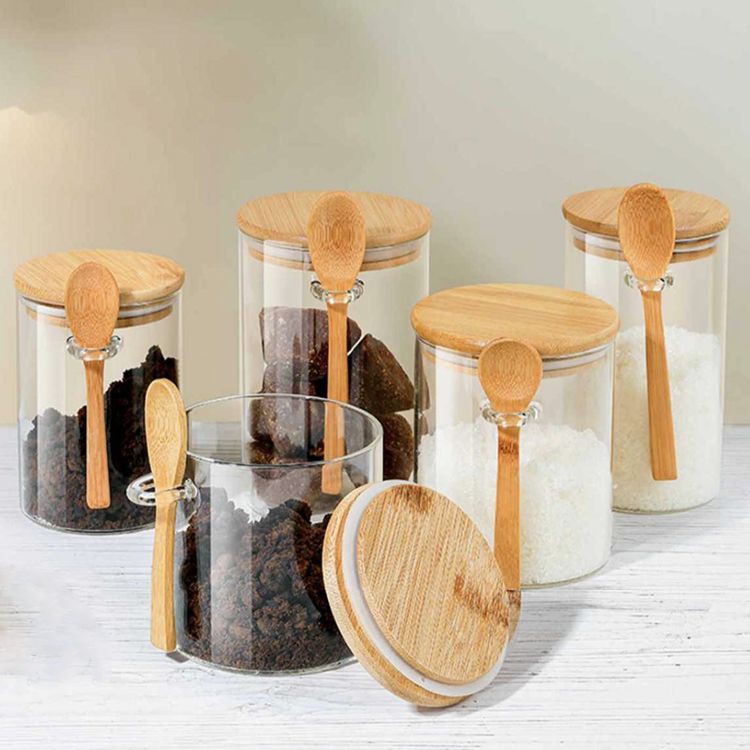
Glass Spice Jars Manufacturing Process
Hot End Processes
The first stage of the glass bottle production process begins with the hot end processes, which typically employ high amounts of heat to produce and shape a glass container. A furnace is first used to mold molten glass, which fed to the furnace as glass feedstock. Soda-lime glass stock accounts for the majority (around 90 percent) of the types of glass products, and is typically largely comprised of silica, with about 10 percent each of calcium oxide and lime. Small amounts of aluminum oxide, ferric oxide, barium oxide, sulfur trioxide, and magnesia also account for about 5 percent of soda-lime glass.
Press-and-Blow Molding Glass
Press-and-blow formation takes place in an individual section (IS) machine and is the more commonly used method in glass-container production. IS machines have between five and 20 sections, all identical, which can each carry out the glass-container forming process simultaneously and completely. The result is that five to 20 containers can be produced with one machine at the same time.
Blow-and-Blow
Like press-and-blow formation, blow-and-blow takes place in an IS machine, where a gob is released during the plastic stage and moved along to the molds. However, in blow-and-blow formation, the gob is forced into the blank mold using compressed air to push the gob into place. The gob, now a parison, is then flipped into a corresponding final mold where it is blown again, to form the interior side of the glass container. Glass bottles of varying neck thickness can be made using blow-and-blow formation.
Annealing Glass Bottles
Once formation is complete, some bottles may suffer from stress as a result of unequal cooling rates. An annealing oven, also known as a lehr, can be used to reheat and cool glass containers to rectify stress and make the bottle stronger.
Cold End Processes
At this stage in glass production, the bottles or glass containers are inspected and packaged. Inspection is often done by a combination of automated and mechanical inspection, to ensure the integrity of the final product. Common faults include checks (cracks in the glass) and stones (pieces of the furnace that melt off and are subsequently worked into the final container), which are important to catch because they can compromise the component. Packaging methods will vary from factory to factory depending on the specific type of bottle and the size of the production run.
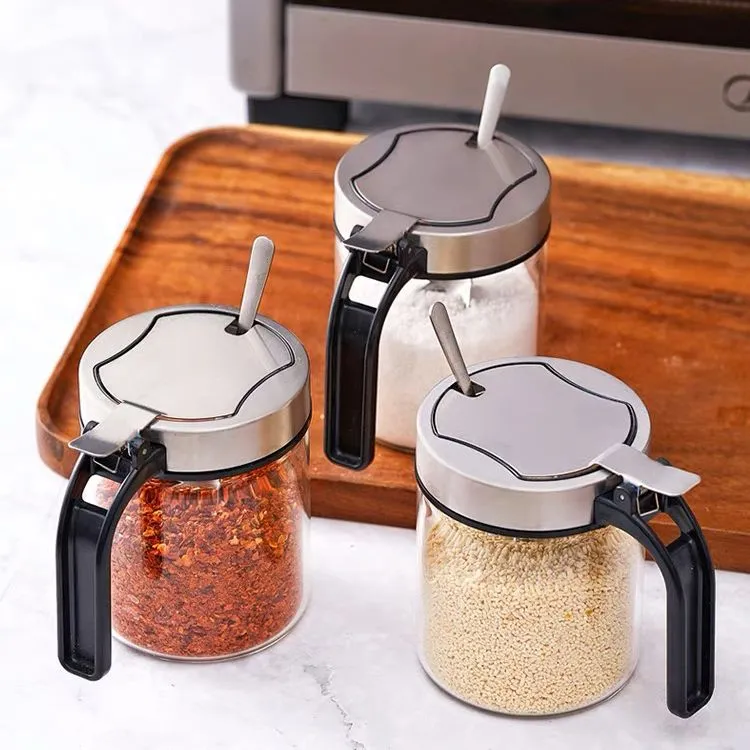
How to Maintain Glass Spice Jars
Store Glass Spice Jars in a cool, dark place
Heat and light can cause spices to lose their flavor, so it's best to keep them stored in a cool, dark cupboard or pantry.
Keep the lids on tight
Make sure the lids are screwed on tightly so that air cannot get in and dry out the spices.
Use a Glass Spice Jars rack
A spice rack is a great way to organize your spices and keep them within easy reach when you need them. Plus, it looks much neater than having them all jumbled together in a drawer!
Label each jar with the name of the spice and the date you purchased it
This will help you keep track of how long each spice has been open and whether or not it needs to be replaced.
Clean Glass Spice Jars regularly with hot water and soap
Over time, spices can leave behind residue that can make your jars look dirty or discolored. To clean them, simply wash the jars with hot water and dish soap then rinse well.
Tools and Tricks To Clean and Glass Spice Jars
Soak jars to remove labels
The easiest trick to remove labels is to let them soak in water for a few hours or a day. The label becomes much less sticky after soaking and, in many cases, slip off or can be easily scraped off with the back of a butter knife under running water. I often do this with our pasta jars.
A little scrubbing and scraping
If the label is a stickler and soaking doesn't help you remove it, After the jar has sat in the solution for several hours (or even a day or more), rinse it and use the back of a butter knife to scrape off the label under running water.On rare occasions, you may need to add a little elbow grease. As I mentioned above, manufacturers love their super sticky glue.Typically, I spend a minute or two scrubbing or scraping each glass jar the first time I clean it. But once it's clean, I toss it in the dishwasher with our regular dishes whenever I need to wash it.
Peel the label slowly if you can
Some manufacturers take it slightly easier on the glue and you can peel off most of the label without leaving much paper or residue. Patience pays here! Depending on the type of glue, you may have a chance of peeling off the label without much residue if you pull it off slowly.No matter the brand or bottle, I always try to peel off the label before scrubbing and scraping. If you start to peel back the label and see a glimmer of hope that it will come off clean, don't rush! All hope goes down the drain without a healthy dose of patience.
Simple tools for scrubbing off labels
To scrub off the labels, I use primarily stainless steel scrubbing pads. I've also used Brillo pads, though these aren't quite as effective. Forget standard brushes and sponges; they don't have enough grit to break down the glue.I scrub the glass jars and bottles over the sink and rinse them periodically until they are squeaky clean. Although it's a bit of a pain to clean them if soaking doesn't work, clean glass jars and bottles are so satisfying!We keep a small plate next to the sink where the scrubbing pads live along with our dish soap and sponge. The scrubbing pad comes in a sphere shape, but ours has entirely lost its form. It is many months old but is still going strong. As long as it doesn't smell and isn't covered in food bits, I plan to reuse it.
Our Factory
Our company was founded by a skilled worker who had a deep love for his family and a passion for creating beautiful kitchen glass products. As he worked tirelessly to perfect his craft, he found that the products on the market didn't meet his exacting standards. He decided to create his own product that would be perfect for his family's needs, and that was the beginning of our journey.As his daughter grew up, she saw how much her father loved his work and how much he cared for their family. She was inspired by his passion and determination to create something that was not only beautiful, but also practical and useful. She suggested that they start a company to share their products with the world, and so they did.


Our certificate

FAQ
As one of the leading glass spice jars manufacturers and suppliers in China, we warmly welcome you to buy bulk discount glass spice jars made in China here from our factory. All customized products are with high quality and competitive price. Contact us for quotation.
Glass Jar with Bamboo Lid and Spoon, Glass Bottles with Cork Lids, Glass Spice Jars