


Related Product
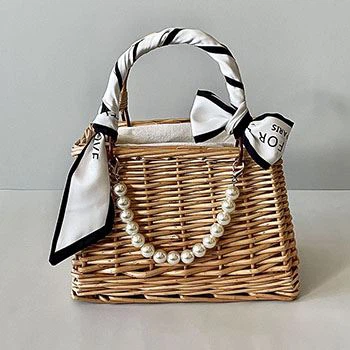


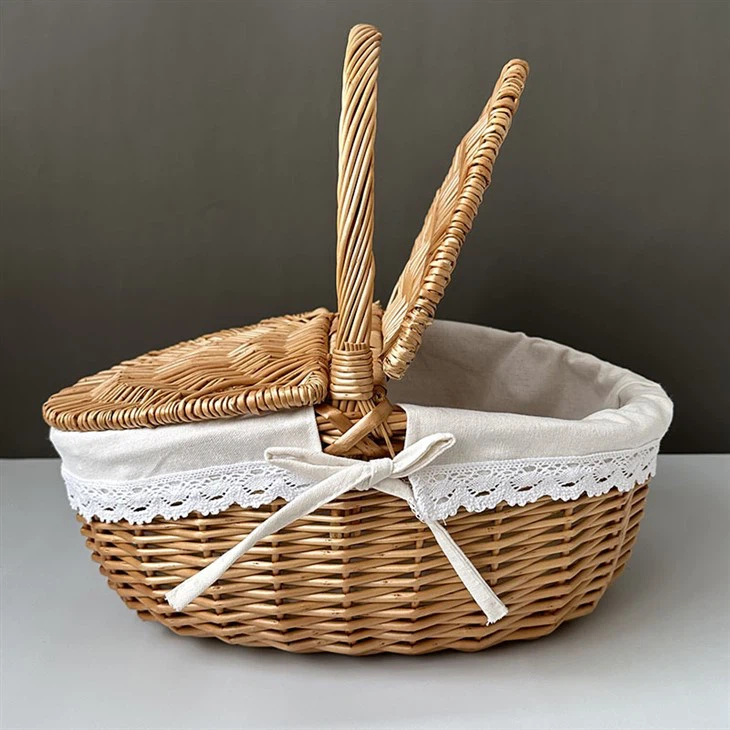

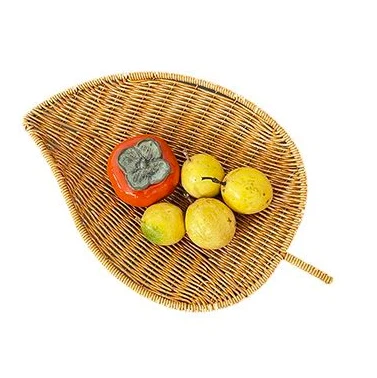
Benefits of Round Rattan Basket
Versatility
Round Rattan Basket come in a variety of shapes and sizes, making them versatile for use in any room. Use them to store blankets and pillows in your living room, keep towels and toiletries organized in your bathroom, or store hats and gloves in your entryway.
Durability
Round Rattan Basket are made from natural materials, which makes them strong and durable. They can hold heavy items and withstand wear and tear from frequent use.
Style
Round Rattan Basket have a timeless appeal that can add warmth and texture to any room. They can be easily paired with different decor styles, from modern to traditional.
Easy to Clean
Round Rattan Basket are easy to clean and maintain. Simply wipe them down with a damp cloth or use a soft brush to remove any debris.
4 Reasons Why Round Rattan Basket Are Eco-Friendly
Round Rattan Basket Are Reusable
In fact, people would be hard pressed to throw such sturdy containers away. Round Rattan Basket make excellent replacements for plastic or paper bags for your store. Regular customers can shop with them for years. When you present gifts to your employees and clients in Round Rattan Basket, the Round Rattan Basket find their way on to shelves as organizers, in closets as knick-knack holders and on desks as waste paper bins. This cuts down on the amount of stuff going to the local landfill.
Round Rattan Basket Are Made From Sustainable Materials
Traditional wicker is from plants such as bamboo, rattan and seagrass. Bamboo is actually a grass and grows 3 times faster than traditional lumber sources. People can harvest a high yield from them after 3 to 7 years, and a single stand can produce 200 poles for 5 years. This means that you can harvest them in a sustainable way easily. Growing bamboo is good for the Earth on its own. They soak up carbon quickly and produce more oxygen than trees. The plant can prevent soil erosion as well.
Cleaning Is Easy On The Environment
There are some containers than require soaps or cleaning products. Round Rattan Basket are sustainable from creation to death, and maintaining them is asgreen as it gets. A deep cleaning requires that you to get a cotton cloth slightly damp with cold water and wipe it on the basket. Normal cleaning requires dusting with a feather duster or a natural bristle paintbrush. No cleaning products of any type required.
Round Rattan Basket Are Biodegradable
Bamboo, rattan and seagrass are made of natural fibers. They are very strong and last a long time, but when you finally need to throw it out, it degrades into a nice, safe dirt. Sun and soil microorganisms render it without any side effects. Rattan and seagrasses likewise retire gracefully as compost at the end of their long, productive lives. So they are not only saving space in the landfill in the short-term because they are reused, but they ultimately take up no space at all in the long run.
Components of Round Rattan Basket
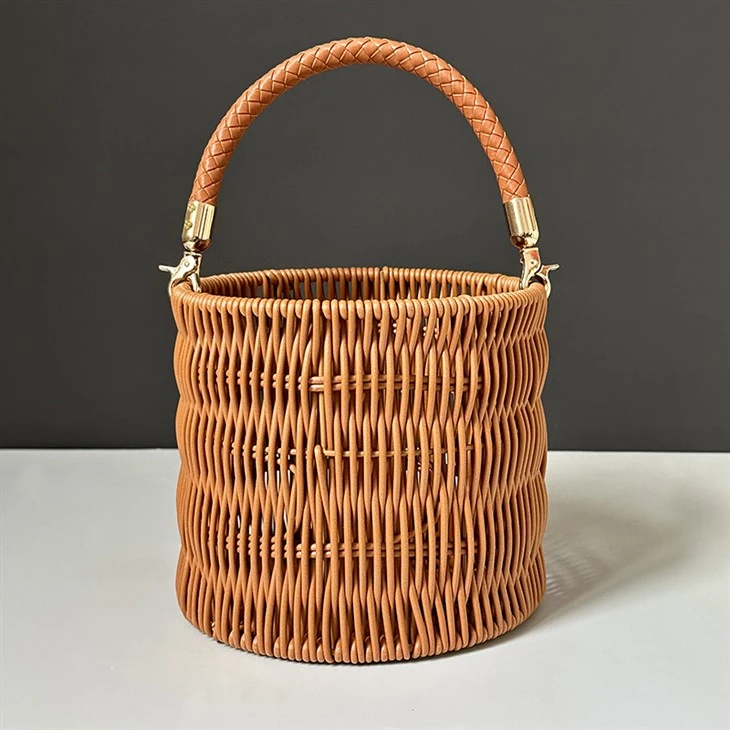
Rattan cane
Rattan vs cane is also confusing to many. Cane is a harvested, cleaned rattan stem cleared from sheaths. Large diameter canes are commonly used for producing furniture, while small ones are used for making baskets, planters, trays, lampshades and other homewares.
Rattan core
To get rattan core and skin from rattan canes, processors divide the canes lengthwise either manually using a knife or by mechanical means.Rattan cores exist in a range of shape and diameter. The diameters of the rattan cores range 2-10 mm in width.In Vietnam, local artisans often use round core threads for weaving Vietnam wicker baskets, wicker dinner trays, indoor wicker planter, lampshades, wicker pet houses, baby toys, etc.
Rattan skin
Rattan skin (rattan peel) is extracted from rattan cane. The skin is flat or semi-circular with a width of 2-10mm. It is highly pliable, a bit shiny, durable, hard to damage and get mold.It is usually used for weaving baskets, binding the joints of furniture and making rattan webbing for decorating furniture or other homewares. Rattan webbing (also called rattan cane webbing) is usually produced by machine, and this comes in many patterns.
The Making Process of Round Rattan Baskets
The process begins by choosing a design or standard pattern including shape and size. Materials are also gathered or purchased, and the necessary tools for working those materials are assembled. If the fibers are such that they need to be soaked, then soaking is done in advance of basket making, depending on the nature of the fiber. Fibers are also dyed in advance of weaving or coiling.
If the design calls for a wood base, the base is shaped, and holes are bored in the wood to accommodate the spokes forming the sides of the basket.
A basket is built from the ground up. Its base or bottom is made first. For a round basket with a flat bottom (as an example of any of hundreds of types of baskets that may be manufactured), the base is made by laying out a series of spokes that are stiff and work like rods to support more flexible woven material. Other rods called weavers are woven in and out among the spokes; the weavers are lighter, thinner, and more flexible, so that they can be woven and so they won't be strong enough to distort the spokes.
The sides of this kind of basket can be formed in either of two ways. Initially, the spokes for the base can be cut to be long enough to form the sides as well. When the base is finished, the spokes are soaked to soften them, squeezed with pliers at the perimeter of the base, and then bent up to form the sides.
The sides are also formed by cutting side spokes and weaving them down through the base perimeter fibers and then up again so they form side spokes. Side spokes are essential if the base spokes are large. The sides are then woven with flexible weavers that are passed over and under the side spokes. Again, these weavers need to be smaller than the material forming the spokes so the spokes are not distorted. The side spokes are longer than the finished basket is tall; the remaining ends of the spokes are used to finish the top edge of the basket with a border. The spoke ends need to be soaked before the border can be made so the spokes can more easily be woven in and out of each other and the ends turned down into the basket sides.
The handle of the basket is chosen of the best available reed to be strong, durable, attractive, and relatively smooth to the touch so it can be held. The ends of the handle reeds are soaked in water and threaded down into the sides of the basket. The over-lap has to be long enough to prevent the handle from pulling out of the sides when the basket is filled and used.
Moisture Control
To combat mold growth effectively, controlling moisture levels is paramount. Proper Storage plays a significant role in preventing moisture buildup. Avoid placing wicker baskets in areas prone to high humidity, such as basements or bathrooms. Instead, opt for well-ventilated spaces with adequate airflow.
Cleaning and Maintenance
Regular Cleaning and Maintenance are essential for keeping wicker baskets mold-free. Dust and debris can accumulate on the surface, trapping moisture and promoting mold growth. Use a soft brush or vacuum cleaner attachment to remove dirt and dust from the basket's surface regularly. Additionally, wipe down the baskets with a damp cloth soaked in a mild detergent solution to remove any stubborn stains or residue.
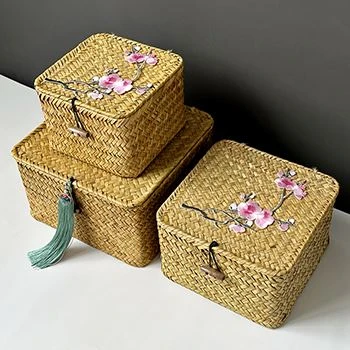
Natural Mold Prevention Methods for Round Rattan Baskets
Vinegar Solution
White vinegar is a versatile household ingredient known for its antibacterial and antifungal properties. Create a Vinegar Solution by mixing equal parts white vinegar and water in a spray bottle. Lightly mist the Round Rattan Basket with the solution, ensuring thorough coverage. Allow the baskets to air dry completely before returning them to their storage space.
Baking Soda Paste
Baking soda is another natural deodorizer and mild abrasive that can help prevent mold growth on Round Rattan Basket. Baking Soda Paste can be made by mixing baking soda with water to form a thick paste. Apply the paste to the affected areas of the basket, gently scrubbing with a soft brush. Rinse the baskets with clean water and allow them to dry thoroughly.
Protective Coatings
Applying Protective Coatings to Round Rattan Basket can provide an additional layer of defense against mold and moisture. Natural oils such as linseed or tung oil can penetrate the wicker fibers, creating a barrier that repels moisture and inhibits mold growth.
Linseed Oil
Linseed oil is derived from the flaxseed plant and is prized for its water-repellent properties. To apply Linseed Oil, first, ensure the wicker basket is clean and dry. Using a soft cloth or brush, evenly coat the surface of the basket with linseed oil, allowing it to penetrate the fibers. Wipe off any excess oil and allow the basket to dry completely before us.
FAQ


